 Doğu Türkistan News, East Turkestan News Doğu Türkistan Haberleri , East Turkestan News , Türkistan News, Çin Zulmü, Çin Haberleri, Toplama Kampları, Soykırım, Uygur Haberleri, Uygur Türkleri

İlgili Makaleler



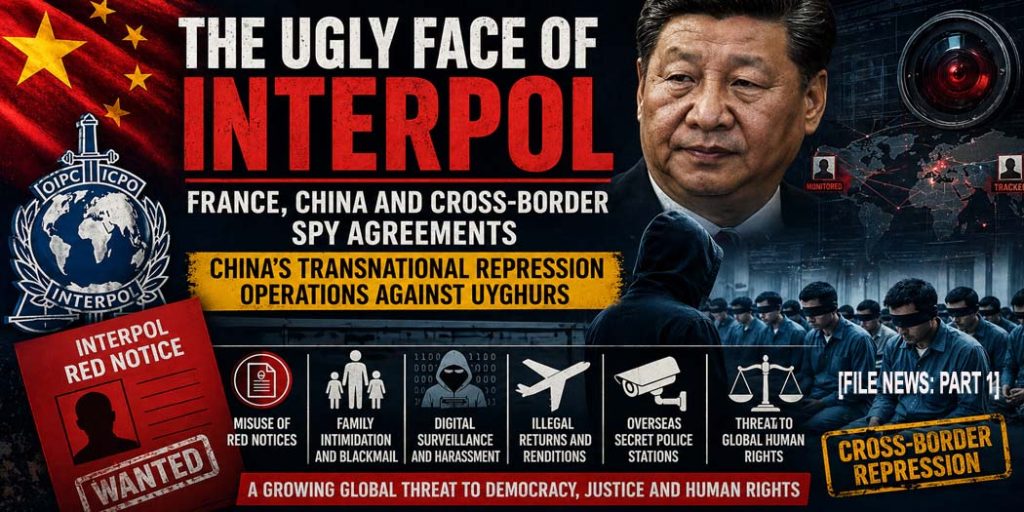
China’s Uyghur operations using INTERPOL and other cross-border mechanisms. This issue is widely covered in international law and human rights reports under the heading “Transnational Repression.” In particular, reports covering the 2024–2026 period indicate that Beijing has made these activities systematic.
1. INTERPOL and Abuse of “Red Notices”
China frequently uses INTERPOL mechanisms to target political dissidents and Uyghur activists.
Mechanism of Operation: China issues Red Notices against activists on charges such as “terrorism” or “economic crimes,” thereby preventing their travel or enabling their detention in countries where they have sought asylum.
Reversals: Under international pressure, INTERPOL has in some cases acknowledged that such notices are politically motivated and cancelled them (for example, the case of Idris Hasan, arrested in Morocco in 2021). However, according to Freedom House’s 2026 report, despite INTERPOL’s reform efforts, significant loopholes remain that allow member states to abuse this system.
2. Methods of Transnational Operations
China’s strategies against Uyghurs abroad are not limited to formal extradition requests:
Family-Based Coercion: A common method is to pressure individuals abroad into silence or espionage by imprisoning or threatening their family members in East Turkestan.
Digital Surveillance and Harassment: There has been an increase in spyware targeting the Uyghur diaspora, as well as threat messages and disinformation campaigns conducted via social media.
Extra-Legal Renditions: Cases have been reported where individuals were directly transferred to China without formal extradition procedures, through bilateral security agreements with certain countries.
3. Regional Developments and Risk Areas
Southeast Asia: In February 2025, Thailand’s extradition of approximately 40 Uyghur men—held for nearly 10 years in detention—to China in violation of the international law principle of non-refoulement caused widespread criticism. UN experts reiterated in early 2026 their deep concern about the fate of these individuals.
Middle East and Gulf Countries: Countries such as the UAE, Saudi Arabia, and Egypt are classified as “high-risk” regions for Uyghurs due to their economic and security cooperation with China. According to Oxus Society data, cases in this region are increasing.
Türkiye: Türkiye hosts one of the largest Uyghur diasporas in the world. According to 2024 and 2025 reports (including HRW), Chinese intelligence activities targeting Uyghurs in Türkiye (information gathering, espionage networks) have been identified, and legal cases have been opened against some suspects. However, rejection of citizenship applications or changes in residence permits on “national security” grounds has created uncertainty within the community.
4. International Responses
New Laws: The United States and some European countries have introduced regulations such as “Countering Transnational Repression Acts,” criminalizing the harassment of individuals on their territory by foreign government agents.
Monitoring: Organizations such as Freedom House and Human Rights Watch (HRW) describe China as a global leader in transnational repression activities and frame this as a threat to global democracy.
In summary, China’s operations continue in a multi-layered structure involving diplomatic pressure, INTERPOL abuse, digital tracking, and family-based coercion. The risk level for Uyghurs living in countries with extradition agreements or high economic dependence on China remains high as of 2026.
Analysis: Scale of the Threat in a 2026 Perspective
Cyber Espionage and Data Tracking: China is known to target not only individuals but also the digital networks used by diaspora communities. Through advanced spyware, it creates a form of “digital blockade” over individuals’ social environments.
Underground Police Stations: International reports document unofficial units operating under the guise of “service centers” in some countries, which attempt to pressure Uyghurs into returning to China.
Legal Barriers: In Türkiye, although an extradition agreement exists, constitutional protections and the principle of non-refoulement in international law serve as strong legal safeguards against sending individuals to countries where they risk torture or execution.
Psychological Pressure and Self-Censorship: Coercion through family members not only targets activists but also silences ordinary diaspora members, indirectly restricting freedom of expression even in democratic countries.
Turkistan News / NEWS CENTER
#UyghurRights #TransnationalRepression #HumanRights #China #Interpol #RedNotice #UyghurDiaspora #FreedomOfSpeech #RuleOfLaw #InternationalLaw #HumanRightsWatch #FreedomHouse #StateSurveillance #DigitalSurveillance #Spyware #FamilyCoercion #ForcedReturn #NonRefoulement #AsylumSeekers #PoliticalDissent #CivilLiberties #GlobalSecurity #HumanRightsViolation #EastTurkestan #Xinjiang #Geopolitics #StateRepression #PrivacyRights #CyberEspionage #Accountability
#UyghurNews #TransnationalRepression #HumanRightsNews #ChinaNews #InterpolNews #RedNoticeAbuse #UyghurCrisis #HumanRightsReport #BreakingNews #WorldNews #InternationalNews #HumanRightsAlert #PoliticalNews #GlobalAffairs #SecurityNews #GeopoliticsNews #AsiaNews #EastTurkestanNews #XinjiangNews #DiasporaNews #FreedomNews #JusticeNews #LegalNews #SurveillanceNews #SpyNetwork #StateRepression #ForcedRepatriation #AsylumNews #RightsViolation #GlobalWatch